How to Avoid Conflict Without Being Conflict Avoidant
We all know communication is hard, but why is that exactly?
Well, on the most basic level, communication involves at least four things:
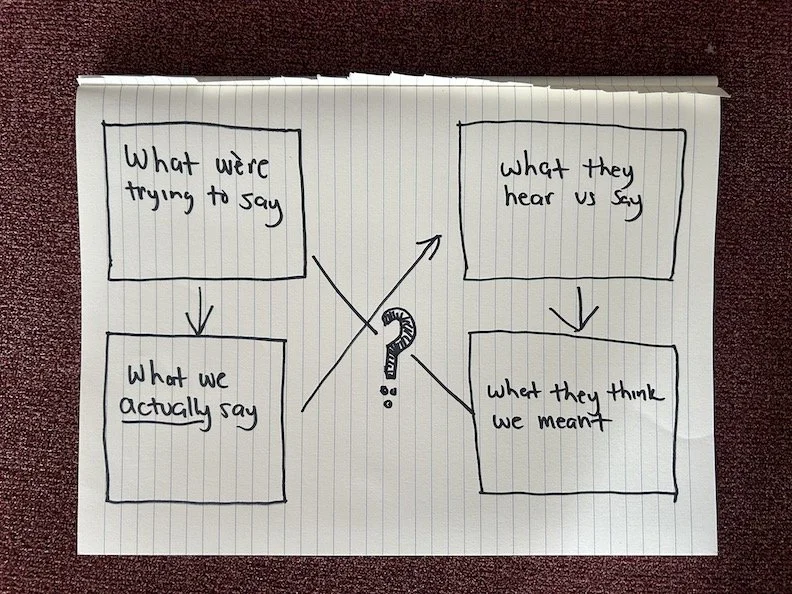
1) We have what we’re trying to communicate to somebody, and 2) then we have what we actually end up saying and how we say it.
Fact: The nonverbal aspects of communication are as important than the words we actually say.
Think how different it feels to you if somebody asks you a question with a curious tone, a genuine look on their face, and open body posture. Now imagine how the same question would feel if they were yelling at you, with an angry look on their face, and their arms thrown wide out to each side.
Once we’ve said/communicate that thing, then 3) the other person will hear some or all of what we say and how we say it, and then 4) they’ll have their interpretation of what we’re saying.
Even in with the best of faith, communication is a game of telephone where meaning gets easily distorted. This is where avoidable conflict comes in.
So often in relationships and life, we immediately react to our interpretation of what somebody says to us. This means that usually what we’re reacting to is filled with subtle changes, unclear meanings, and our own minds filling in a lot of gaps. A lot of the time, we “hear” somebody noticeably different than what the other person was hoping to convey.
We can avoid the conflict that miscommunication causes with some simple strategies.
1) First, slow your roll: Okay, more gently said, if you feel defensive or annoyed or confused by what somebody said, that’s your cue to take a pause. Your interpretation may be spot on, but give yourself a moment to find out more before reacting. You may need to practice some self-soothing techniques or let the “fight” parts of yourself know that you’ve got this covered, but it’s actually the most generous thing you can do for yourself to find out more before letting things head down a path they never needed to.
2) Ask clarifying questions: What does that sound like? (cough, that’s a clarifying question, cough) You might ask, “Can you say more about X?”, or “What you mean by X?”, or “Are you saying X?” Your own nonverbal communication is vital here. If I yell at you “What do you MEAN BY THAT?!” it’ll feel very different than asking you openly, “What do you mean when you say that?”
3) Repeat back what you heard: Once we think we’re clear on what’s being communicated, reflecting it back to the person is a great way to make sure we’ve really got their meaning clear.
Even in the best of times with the best of intentions, communication is hard. These strategies will help you have better communication with the people you care about, avoid unneeded conflict, and feel stronger connections with people.